The Wind as a Comic Character, Not Just a Backdrop
Coastal wind can turn a scene by disrupting a clear plan. Learn to make gusts reveal character, sharpen timing, and shape seaside comedy without stealing the joke.
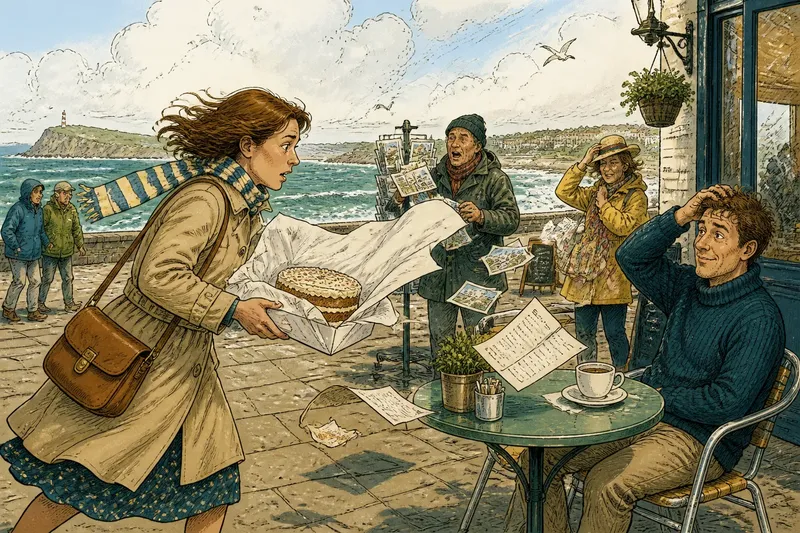
Coastal wind makes a comic scene work when it disrupts a character’s clear plan. A gust can interrupt a careful introduction, scatter a menu, or send someone scrambling after a hat; the humor comes from how people try to carry on.
Wind has no motive or comic timing of its own. The writer supplies both by showing how its force collides with a character’s priorities.
Wind Changes Plans
A useful comic gust arrives after a character has committed to something. A visitor starts a grand speech, a café owner sets out napkins, or a local insists that a picnic is perfectly manageable. The weather changes the practical conditions, forcing someone to adapt, persist, or pretend nothing has happened.
Make the plan clear before the wind disrupts it. When readers know what someone wants and has arranged, a sudden change has consequences. Without that setup, a flapping coat or rolling paper is just motion.
Imagine a fictional character carrying a carefully wrapped cake to a beach gathering, hoping to impress a new neighbor. A crosswind lifts the paper covering and exposes the icing before the character reaches the group. The character hurries to preserve the surprise, while the neighbor politely pretends not to notice.
The gust has changed the social task: now the character must manage embarrassment as well as dessert. The neighbor must decide whether to help or maintain the polite fiction.
Give the Gust a Cue
Weather feels active when it has a readable cue and a visible effect. A gull leans into the air, a loose menu lifts at one corner, or a scarf catches as a character pauses mid-sentence. One precise detail can signal the gust; the next sentence can show what it interrupts.
Sound can provide timing, too. A gust might swallow the serious part of a toast, prompting the speaker to repeat it louder while everyone else turns to secure the paper plates. Keep the reaction more important than the noise.
Show Different Responses
Wind reveals character through choices. One person rescues the picnic tablecloth, another holds a hat in place, and a third insists that everything is proceeding as intended. Each response makes sense to the person choosing it, and their contrast creates the comedy.
Coastal familiarity can sharpen that contrast without relying on an accent or a stock “weather-beaten local.” A character who checks a paper menu against a sheltered wall may be practical; a newcomer who keeps unfolding the same map in the open may be optimistic or unwilling to admit defeat. Let actions carry the distinction.
Keep each person’s aim intact as the wind complicates it. If someone is trying to apologize, sell a souvenir, or impress a friend, the gust should press on that effort rather than replace it. Readers follow the human intention through changing conditions.
Questions About Wind Comedy?
When should the wind arrive?
Bring it in once the character’s plan is clear but before the scene settles into routine. That timing gives the gust something specific to interrupt and leaves room for a reaction.
How much weather detail is enough?
Choose one clear sign and one consequence, then return to the people. Add another detail only if it changes what someone can do or what they believe is happening.
Can the wind create a misunderstanding?
Yes, if the confusion grows from the character’s situation rather than arriving arbitrarily. A gust that carries away a spoken word can prompt a plausible wrong reply, revealing someone’s eagerness to agree or habit of taking charge.
How do I keep weather from becoming the whole joke?
Give the character a goal that matters even on a calm day, then let the wind interfere. The comic turn should hinge on a choice, a social consequence, or a changed understanding—not simply another gust.
Shape the Escalation
A scene can build through a small sequence of adjustments. First, the wind makes the original plan awkward. Then the character tries a sensible fix. Finally, that fix creates a new complication or exposes a hidden priority.
Imagine a fictional stallholder with a stack of flyers on an exposed pier. A gust lifts the top sheets; the stallholder pins the stack with a tin, then places it so close to the display that visitors must ask permission to take a flyer. The expected result is a brief, awkward exchange: the effort to protect the invitation has turned it into a barrier.
Escalation does not require stronger weather each time. Instead, change the stakes: a physical inconvenience can become social awkwardness, or a private worry can become visible to the group.
Use the Coastal Setting
Coastal wind is not interchangeable with a generic storm. A promenade’s open stretch, a sheltered café doorway, or an exposed pier approach can shape the action. The same breeze feels different when characters can step behind a wall than when they have nowhere convenient to take cover.
Let local details emerge through practical choices. A character might tuck a receipt into a pocket before reading it, turn a chair away from the gust, or wait for a lull before opening a paper bag. Such habits make the setting tangible without pausing the comedy to explain it.
Keep the physical effects plausible for the scene. A light gust can tug at loose paper or make conversation harder to hear; a stronger change may force people to stop what they are doing. Let objects and decisions make the weather legible.
End with a Choice
A satisfying final beat often comes when a character adapts in a way that says more than intended. Someone may abandon a carefully rehearsed entrance to help another person, or keep defending a plan after everyone else has quietly changed course. The wind alters the scene, but the character’s priorities give that change meaning.
When revising a coastal comedy scene, trace the chain from intention to gust to response to consequence. If removing the wind leaves the action and social turn unchanged, it may be only a backdrop. If its arrival forces a revealing choice, the weather has earned its place in the comedy—and the joke remains about the people caught in it.