Harbour Wall or Promenade Bench for a Seaside Comedy?
Harbour wall or promenade bench for a seaside comedy? Choose the setting that gives your local characters sharper habits, social friction, and a more distinctive joke.
A harbour wall or promenade bench gives a seaside comedy different local material: one gathers people around a shared working edge, while the other sits among the routines of a public walkway. Choose the place for the habits and social rules it reveals, not just the view behind the dialogue.
Harbour wall or promenade bench
A harbour wall belongs to the working geography of a place. Mooring rings, coiled rope, bait tubs, tide marks, and the unofficial knowledge of who owns which boat can all shape what people notice and what they consider normal.
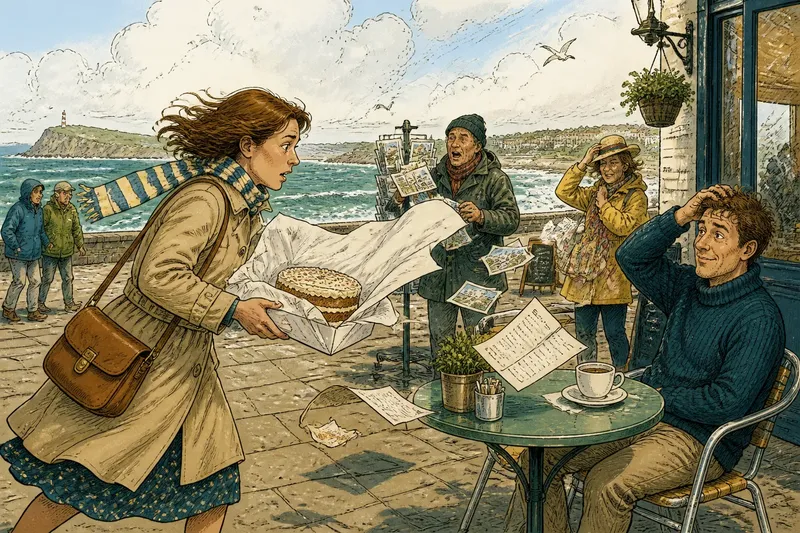
A promenade bench belongs to public routine. It may be where dog walkers pause, where a retired neighbor judges the new paint on the railings, or where someone eats chips while keeping one eye on the harbor. Its comedy can grow from local etiquette: who gets the familiar seat, who leaves room, and who knows the unwritten route around a puddle.
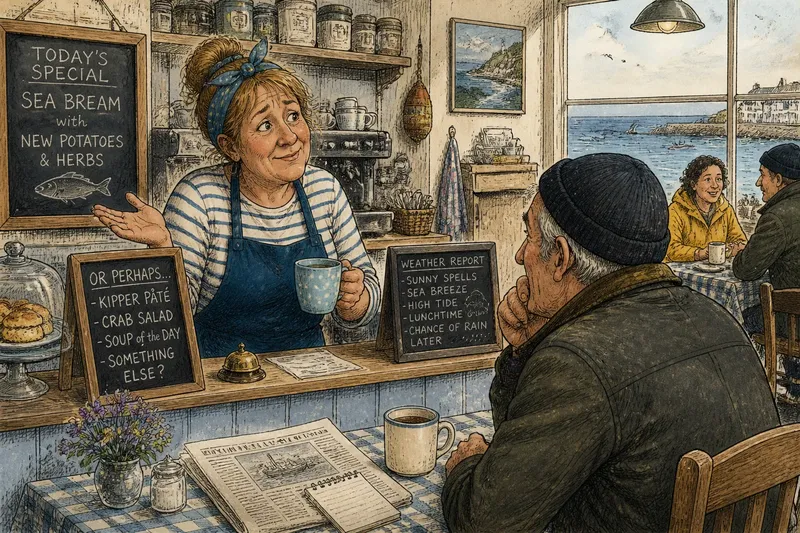
Ask what residents do at each spot when nothing dramatic is happening. The answer gives you a better comic engine than generic seaside scenery: a dispute about whose bucket has been moved, or a regular who treats the bench as an unofficial noticeboard.
Local habits and status
Seaside humor often turns on small distinctions outsiders miss. A character may know the difference between the boat used for work and the boat kept for show, or insist that one stretch of promenade is “the proper way” to reach the fish-and-chip shop.
Those opinions reveal status without requiring a speech about it. Someone who corrects every name for a mooring part may be protecting hard-won expertise; someone who calls every boat “that little one” may be refusing to admit they have lived nearby for years.
Keep the joke aimed at a person’s certainty, vanity, or loyalty rather than treating local speech as a punchline. A distinctive phrase or place name can add texture, but the comic turn should come from what the speaker wants and what their behavior gives away.
Place-specific joke prompts
- Check whether the wall has a local rule about where fishing gear can be left; if residents enforce it, make a character defend the rule, and if the rule is unclear, let that uncertainty fuel a disagreement.
- Check what regulars call a familiar boat or stretch of quay; if the nickname signals affection, let a newcomer misunderstand it, and if it signals rivalry, let a character refuse to use it.
- Check whether the bench is treated as a resting place or a social landmark; if regulars claim particular spots, make a character negotiate for one, and if seating is casual, use the changing neighbors to expose different manners.
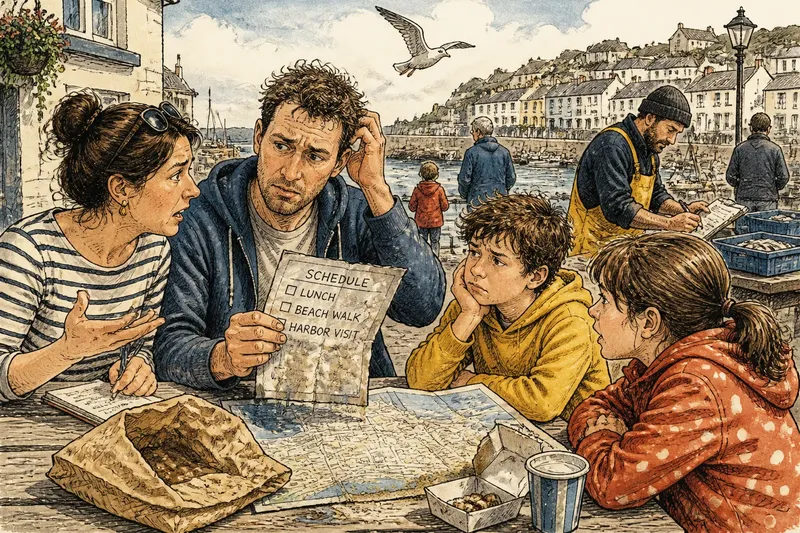
- Check what people carry through the scene, such as a bait tub, dog lead, paper-wrapped lunch, or shopping bag; if an object has a practical purpose, make it complicate a character’s plan, and if it is only decorative, remove it.
- Check which local place names a visitor might mix up; if the names sound alike, let the confusion send someone toward the wrong meeting point, and if they do not, use a character’s overconfident directions instead.
- Check whether work and leisure share the same stretch of waterfront; if they do, let a worker’s practical priority clash with a visitor’s leisurely expectation, and if they do not, keep the scene focused on the local routine that actually belongs there.
A worked harbour scene
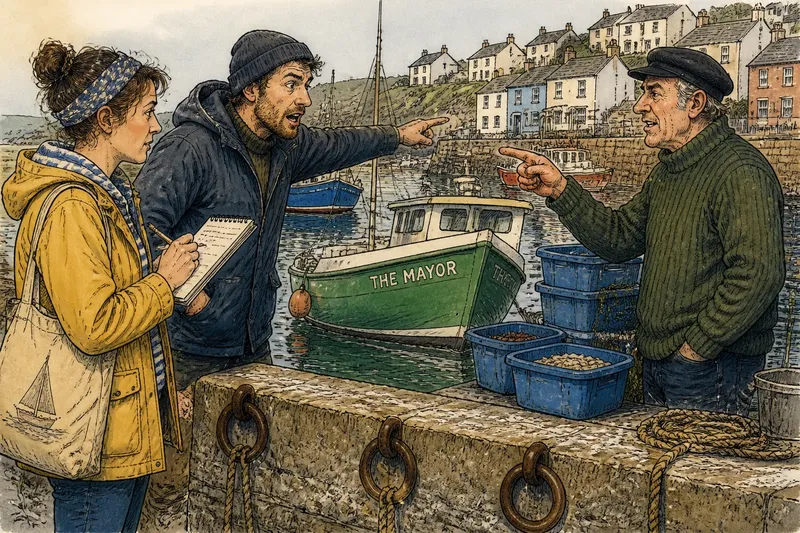
Imagine a fictional harbor where the old wall has three iron rings, a bait seller stacks blue tubs beside the steps, and locals call a short green launch “the Mayor” because its owner likes to give unsolicited advice. These are invented details for the scene, not claims about a real place.
Start with Mara, who has brought a paper list of launch names for a neighborhood boat parade. She writes “the Mayor” beside the green launch, then asks Eli, a local volunteer, whether that is the official name. Eli says it is only a nickname and confidently points to the wrong boat; the owner, standing beside the bait tubs, corrects him.
Next, Mara asks which iron ring the launch uses. Eli points to one, but the owner explains that the ring is reserved for a workboat unloading supplies. Eli has to cross out his answer and admit that he learned the harbor’s names from gossip rather than from the boats themselves.
The result is a scene rooted in local relationships: the nickname shows how residents tease the owner, the ring reveals that working access outranks parade plans, and Eli’s mistake costs him the authority he was trying to display. If the harbor had no shared names or practical claims, this exchange would lose its particular point.
Questions about seaside settings?
What makes a harbor setting feel local?
Use details that affect how residents behave, such as a working quay, a known meeting place, or a nickname with a social history. A place feels specific when its features influence a choice or expose a relationship.
Should I use real dialect?
Use only words you understand and can place naturally in a character’s voice. A light touch with local vocabulary is usually clearer and kinder than spelling every sound phonetically.
How do I avoid making locals a caricature?
Give each character a different reason for caring about the waterfront, and let them be competent in some areas and mistaken in others. The joke should come from their choices, not from presenting a community as uniformly quaint or foolish.
Can a bench carry a whole comic scene?
Yes, if it is tied to a recognizable local routine, such as a regular meeting spot or a view everyone argues about. Give the bench a social meaning that changes what the characters say or do.
Make the location matter
For a seaside comedy, the strongest choice between a harbour wall and promenade bench is the place with a social rule your characters care about. A nickname, a customary seat, or a working claim on the waterfront can turn a familiar setting into a source of friction that belongs to that community.
Near the end of a draft, underline each location detail and ask what it changes: a character’s decision, standing, or relationship with a neighbor. Keep details that do that work, and let the rest stay in the background.