How Seaside Comedy Finds Its Comic Traditions
Seaside comedy draws on holiday farce, local observation, and social contrast. See how these traditions shape a story’s tone without leaning on stock jokes.
Seaside comedy works best when its joke belongs to the kind of story being told, not simply to the view. Holiday farce, local observation, and social contrast offer distinct comic traditions, each giving readers a different reason to laugh.
Three comic traditions
Holiday farce
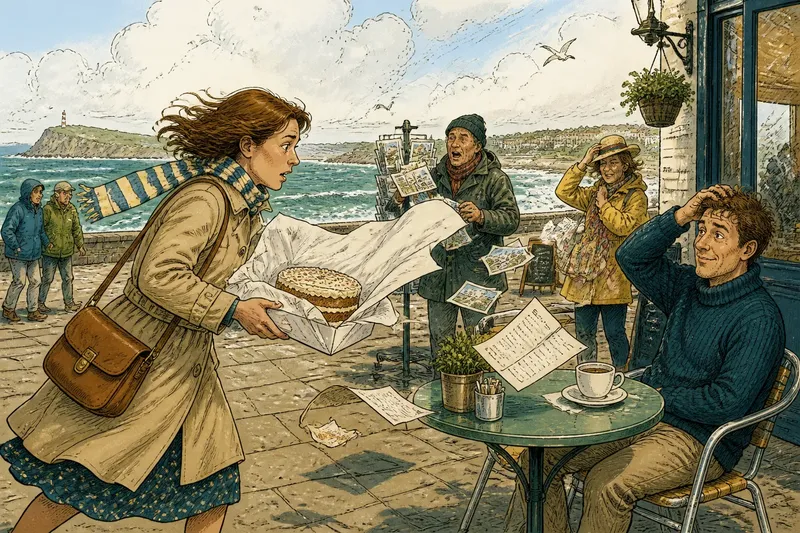
Holiday farce turns a carefully arranged outing into a chain of small complications. The humor comes from people trying to preserve their idea of a perfect day as plans become harder to manage.
This tradition suits stories about relationships under mild strain. A family can disagree over what counts as relaxing without anyone becoming a villain; the comedy grows from incompatible expectations rather than a serious crisis.
Local observation
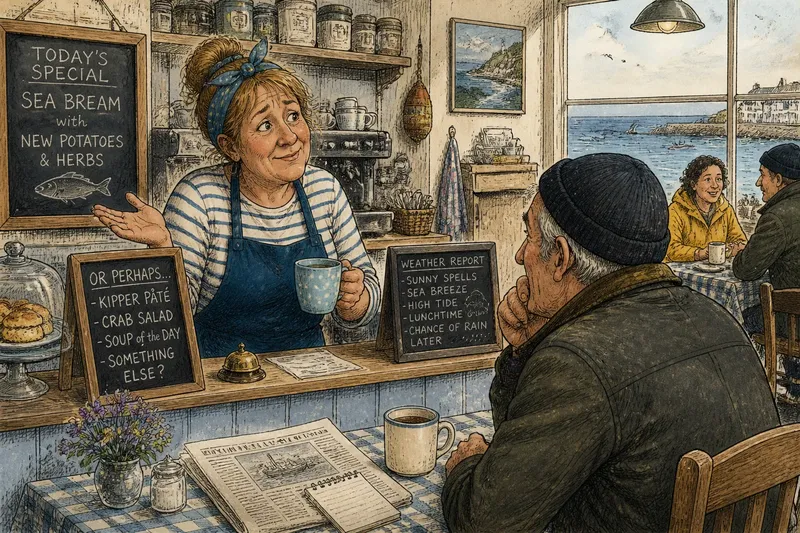
Local observation finds humor in repeated habits, shared knowledge, and the little rules people rarely explain. A visitor might misunderstand how a line at a kiosk works, while residents disagree about the custom themselves.
This approach can welcome newcomers into a community’s point of view. The joke should reveal how people see one another, not reduce a place or its residents to a bundle of quirks.
Social contrast
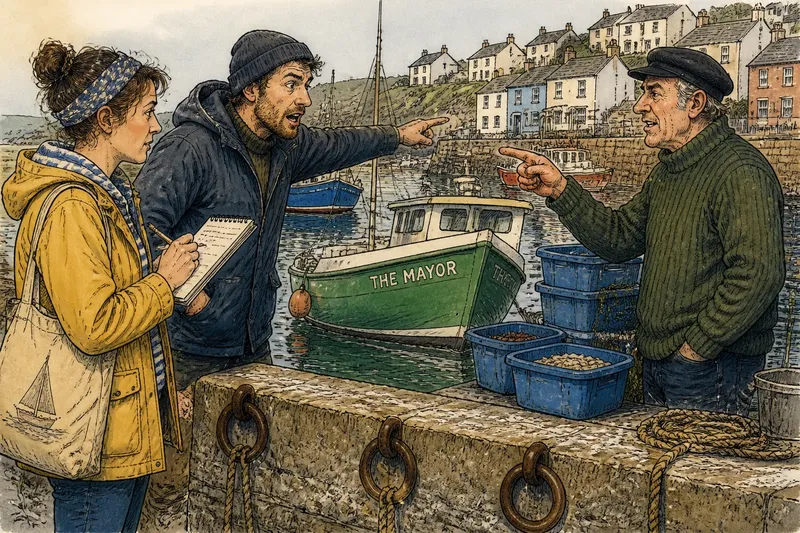
Social contrast sets different relationships to the same shore beside each other. A visitor may treat a harbor as a backdrop for a day out, while a worker nearby is focused on a routine task.
The friction can give a story an edge, especially when one person assumes everyone shares their expectations. Let the comedy expose that blind spot rather than mock someone merely for being unfamiliar with local life.
Choosing the comic contract
Each tradition asks the reader to follow a different source of pleasure. Holiday farce asks how a plan will unravel; local observation asks what people already understand; social contrast asks whose expectations shape an encounter.
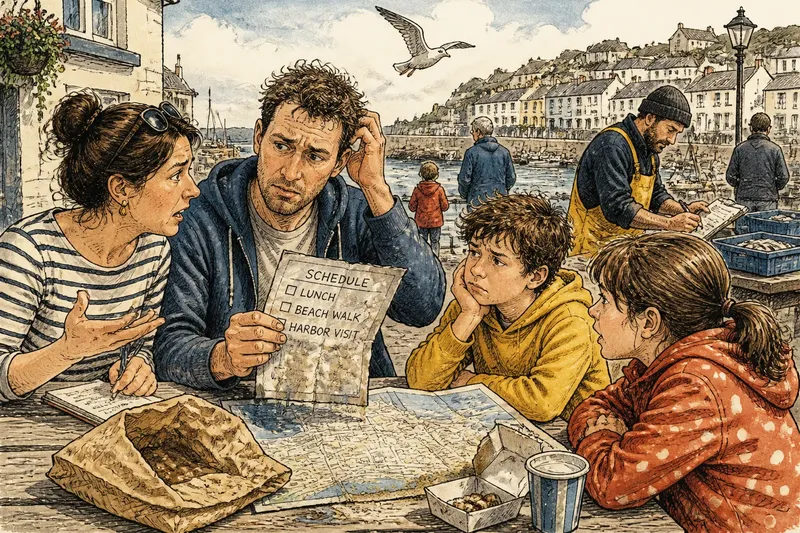
For an invented example, imagine a family arriving in a seaside town with a written schedule for lunch, a beach walk, and a visit to the harbor. The writer chooses holiday farce, has the family repeatedly revise the schedule as their conflicting preferences surface, and ends the scene with the group abandoning the timetable to eat together; the observable result is a warm comic turn from control to compromise, rather than a lesson about local customs.
That choice also clarifies what not to emphasize. If the story’s pleasure comes from a plan falling apart, a long explanation of an unwritten local rule may pull attention away from the farce; if a custom is the point, let the characters’ responses to it carry the scene.
Keeping the humor specific
Specific details make familiar comic forms feel particular to a story. A damp paper bag, a crowded bench, or a conversation that keeps being overheard can give characters something concrete to react to without relying on stock seaside gags.
Say a fictional visitor sits on a harbor-side bench to take a private call, then notices a nearby worker sorting a delivery list and a child waiting for a relative. The visitor moves along, and the resulting awkward exchange shifts the joke from a simple mistake to the characters’ different assumptions about sharing a public space.
For seaside comedy, the useful question is not when the coast became a comic setting, but which tradition best fits the story’s intended pleasure. Choose holiday farce for plans that unravel, local observation for habits worth recognizing, or social contrast for expectations that collide; that decision gives the humor a clear point of view without pretending to settle a historical question.
Which tradition fits?
Why does holiday comedy suit a seaside outing?
A planned day out gives characters an expectation of ease, while sharing space with other people creates room for small disruptions. The gap between the plan and the day’s actual course can reveal competing ideas about comfort and family roles.
How can local humor include newcomers?
Let readers understand the custom before making a newcomer’s misunderstanding the joke. If residents explain it kindly or reveal that they disagree about it too, the humor can invite curiosity rather than exclusion.
When does social contrast work best?
Use it when characters have genuinely different relationships to the same place. A visitor’s leisure and another person’s routine can create comic friction, provided both are treated as people rather than symbols.
How do I choose a seaside comic tone?
Decide whether the main pleasure is a plan going wrong, a familiar habit being recognized, or an assumption being exposed. Build the scene around that choice so its jokes point in the same direction.